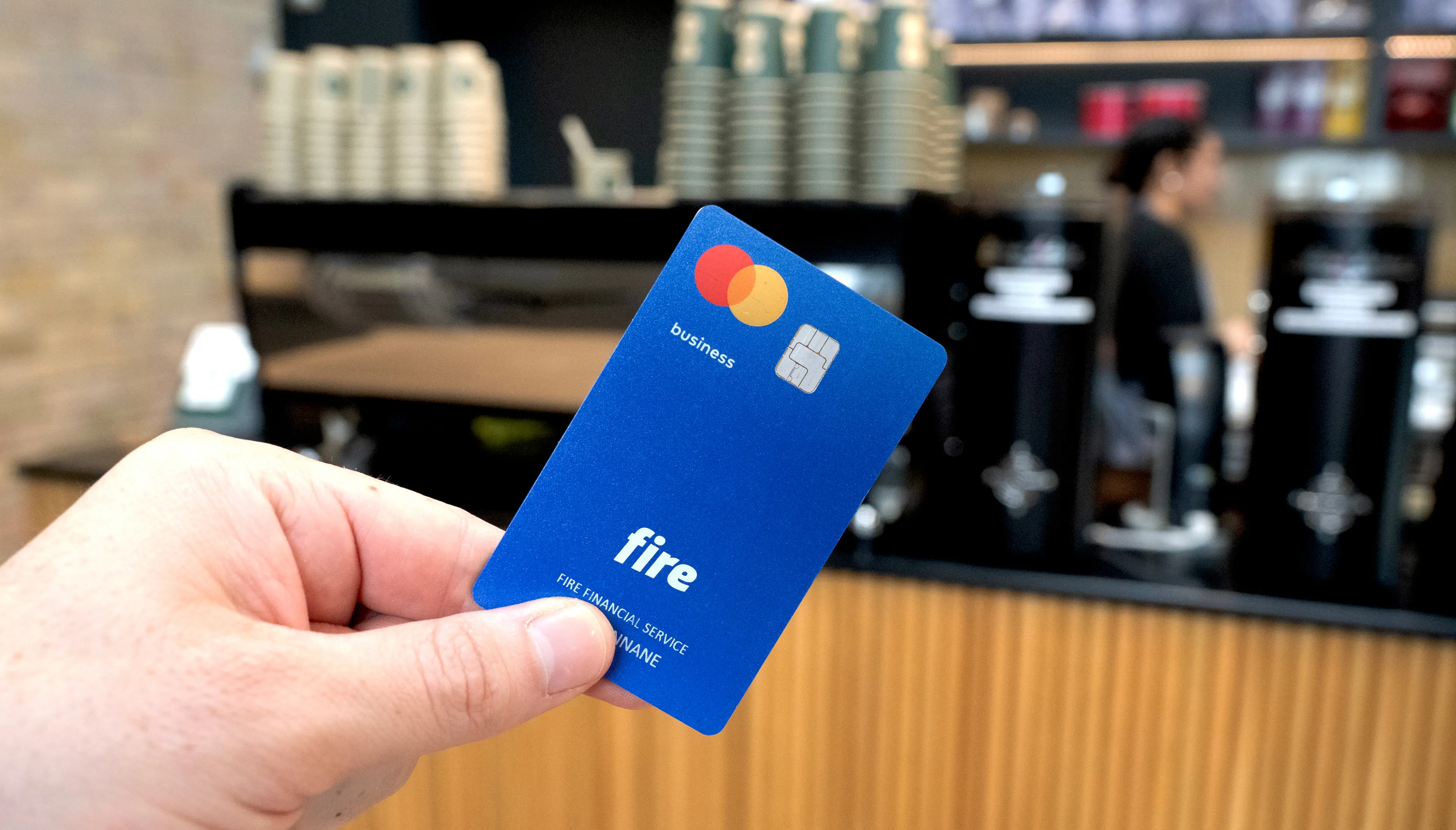
Taking control of recurring spend with dedicated cards

Article snapshot
Accounts and linked Mastercard debit cards can be structured around individual subscriptions, clients or areas of spend, helping businesses keep recurring costs separate and easier to track.
Summary
- Running every software-as-a-service (SaaS) and artificial intelligence (AI) subscription through a single shared company card can make recurring spend harder to track and slower to reconcile.
- Giving each subscription or agency client its own Fire account and linked Mastercard debit card keeps spending separate, with the account balance acting as a built-in limit.
- Card controls, user roles and multi-user authorisation provide greater oversight and an audit trail of who spends and who approves.
- Accounts and cards can be managed through the Fire platform or automated using the Fire Payments API, with webhooks helping to match payments to your records.
The challenge of managing recurring spend
Keeping track of software and subscription costs can become more difficult as the number of tools a business uses grows. Many businesses now manage a mix of monthly SaaS subscriptions and AI services, with costs that can vary depending on usage.
Each charge might be small, but the total can quickly add up. When multiple services are linked to the same company card, it can also become difficult to see exactly what you’re paying for. Renewals happen automatically, free trials can convert into paid subscriptions without anyone noticing, and usage-based AI services can cost more during a busy month.
Mastercard identifies recurring vendor payments and subscription management as use cases for business virtual cards, noting that assigning cards to specific vendors or use cases can make it easier to track spending and simplify reconciliation.
There is also a practical risk when everything is tied to a single card. If the card expires or needs to be blocked, every subscription linked to it can be affected. Using separate cards can give businesses more control over individual areas of spend, while card-level controls can be used to set spending limits and monitor transactions.
In this article, we explore how separating subscriptions across individual accounts and cards can help businesses manage recurring spend, improve visibility and simplify reconciliation.
Where recurring spend gets difficult
When multiple subscriptions are linked to a single card, it can be difficult for finance teams to identify which payments relate to which services after they have been made.
A transaction from a design tool, CRM or AI provider may require checking who owns it, whether it was approved and whether the service is still needed.
Limited visibility into software spend can affect more than just reconciliation. A survey of 300 senior procurement and finance leaders across Europe found that only 19% had full visibility of their organisation’s indirect spend, while 81% identified IT and software as the riskiest categories for unmanaged spend.
AI services can add another layer because costs may vary with usage. Without a separate balance or spending limit, it can be harder to set limits and spot unexpected increases in spend before the bill arrives. Over time, this can leave finance teams dealing with duplicate tools, unused licences and subscriptions that are difficult to identify from a shared statement.

One account, one card, one subscription
One way to separate recurring spend is to use a Fire account and debit card for individual subscriptions, clients or areas of spend. Businesses can choose how they structure their accounts and cards based on their needs. For example, several subscriptions could be managed through one account and card, while separate accounts and cards could be used where greater control or visibility is needed.
Each account can be funded according to the needs of the subscription it supports. This can be particularly useful for usage-based services, where the available balance provides a defined limit on how much can be spent.
Accounts and cards can be managed through the Fire platform or API. Cards can be blocked and unblocked as required, while transaction notifications provide visibility when a card is used. The Fire Payments API also allows businesses to issue cards, access transaction data and manage cards from their own systems.
In practice, this means:
- Separate spend: Each subscription can have its own account and card, making transactions easier to identify and reconcile. Accounts and cards can be structured around individual subscriptions, clients or areas of spend, making transactions easier to identify and reconcile.
- Defined limits: Card transaction limits can be set to suit the needs of each account.
- Individual card control: Cards can be blocked and unblocked as required without affecting the setup for other subscriptions.
- Less manual reconciliation: The transactions API and webhooks can help automate reconciliation and match payment activity to internal records.
Control and oversight
Separating accounts and cards also gives businesses more control over who can access funds and how financial actions are approved.
Control: Fire supports different user roles and permissions, including Card Only Users who can use their assigned card without having wider access to the business account. This allows access to be tailored to each user’s role.
Oversight: Multi-user authorisation allows businesses to introduce additional approval steps for certain actions. This can help separate responsibilities across a finance team and provide greater oversight of who can initiate or approve payments.
Governance: User permissions, approvals and transaction activity create a record of activity across the account. Fire’s multi-user authorisation feature provides an audit trail showing who initiated and approved payments, while its fraud prevention and multi-user controls include role-based permissions, approval thresholds and recorded activity such as initiators, approvers and timestamps.
Fire also uses Strong Customer Authentication (SCA) and 3D Secure (3DS) as part of its debit card security measures.
Where this approach works
AI services can be particularly difficult to manage when costs change according to usage. A dedicated account and card for an AI provider can give finance teams a clearer view of what that service is costing, while the account balance can provide a defined limit on spend. Businesses could also group several AI tools on one account where that better suits their internal processes.
An EY Ireland survey found that 47% of finance leaders were already using AI within finance in 2026, up from 12% the previous year, while 59% were prioritising investment in AI, data and technology infrastructure.
For SaaS subscriptions, businesses can use dedicated accounts and cards to separate software spend by vendor, team or category. This can make recurring payments easier to identify and review, particularly when a business manages a large number of software licences. Fire’s guidance on recurring software spend covers using dedicated cards, linked accounts and spending limits to manage subscription costs.
For paid advertising and marketing agencies, dedicated accounts and cards can separate advertising spend by client or campaign, making costs easier to track and reconcile. Fire’s guidance for media and advertising agencies covers client and campaign specific accounts, spending limits, notifications and card controls for this type of spend.
Fire is also a principal issuer of Mastercard and issues Mastercard debit cards directly, providing the card infrastructure behind this model.
How the setup works
Fire operates in Ireland and the UK, with Fire-EU regulated as a Payment Institution by the Central Bank of Ireland and Fire-UK authorised as an Electronic Money Institution by the Financial Conduct Authority (FCA). Fire is also a principal issuer of Mastercard since 2016.
Businesses can open multiple euro and sterling accounts in real time, each with its own IBAN or account details, and issue cards linked to those accounts. Accounts and cards can be managed through the Fire platform or API, with the API supporting real-time account creation, card issuance, transaction data and webhooks. Fire-to-Fire transfers can also be made instantly, including through the Fire Payments API.
This means businesses can manage their account and card structure through the Fire platform or integrate it into their existing systems where businesses want to automate account creation, card issuance, funding and reconciliation. Fire’s API supports read/write access and event-driven webhooks, while its transactions API can be used with webhooks to automate reconciliation and match payment activity to internal records.

Making recurring spend easier to manage
Fire’s euro and sterling accounts can be paired with debit cards to keep recurring spend separate by subscription, service or client. Accounts can be funded as needed, with card controls and transaction data providing visibility over spend. Businesses can manage the setup through the Fire platform or API, depending on how much they want to automate.
If you’d like to discuss how this setup could work for your AI, SaaS or client advertising spend, contact the Fire team at sales@fire.com.
–
FAQs
Can I open a separate account for each subscription?
Yes. You can open the sterling and euro accounts you need, each with its own details, and link a Mastercard debit card to each one, so every subscription or client sits in its own separate account.
How does this help with AI token spend?
Each account can only spend the balance it holds, so whatever you fund it with becomes the cap. If usage spikes, it’s contained to that one account instead of running up quietly on a shared card.
What happens if a card is compromised?
Only the account linked to that card is affected. You can block and reissue the card, while every other subscription linked to its own account continues running.
How does Fire’s card infrastructure support agencies?
Fire has issued Mastercard debit cards directly since 2016, rather than through an intermediary programme. For agencies managing high, recurring advertising spend, this provides the card infrastructure needed to keep client budgets and payments separated across individual accounts and cards.
Can I automate opening accounts and issuing cards?
Yes. The Fire API lets you create accounts, issue cards, fund them and access transaction data programmatically, with webhooks that can send payment updates to your own systems.
How does this improve reconciliation?
One account and card per subscription or client means each transaction is already linked to a specific vendor or client. This makes it easier to identify and reconcile transactions without working through a shared statement.
Can I limit what staff can do with a card?
Yes. You can add someone as a Card Only User, so they can use a specific card without access to the rest of the account. Multi-user authorisation can also be used to add approval steps where required.
–
This article references Fire’s products or services. It does not constitute advice or a recommendation. Customers should consider their own circumstances and, where appropriate, seek independent professional guidance before making any decisions.