What Wero means for business payment acceptance in Europe

Article snapshot
In this article, we explore Wero and what it means for business payments in Europe. We examine how merchants and platforms can incorporate Wero into their payment acceptance strategies as Wero business payments continue to expand across the European market.
In this article, we explore Wero and what it means for business payments in Europe. We examine how merchants and platforms can incorporate Wero into their payment acceptance strategies as Wero business payments continue to expand across the European market.
–
Wero is the European Payment Initiative’s (EPI) response to the fragmentation of consumer payments across Europe. It is gaining traction in France, Germany, and Belgium, while expansion into additional European markets is underway.
For businesses operating across Europe, Wero is becoming part of the evolving landscape of digital payment solutions. As adoption grows, it may play a role in how merchants and platforms approach payment acceptance across multiple markets.
For platforms, e-commerce merchants, and acquirers, understanding Wero business payments and how they could affect payment strategy is increasingly important. This article explores what Wero is, whether it needs to be factored into your payment acceptance approach, and how unified digital payment solutions can support multiple payment methods without the complexity of managing multiple standalone integrations.
What is Wero, and how does it work?
Wero is a pan-European payment system launched by the EPI. It enables users to send and receive instant payments using a phone number, removing the need for manual entry of traditional bank account details.
It is similar in concept to services such as Zippay in Ireland, but is currently available in select European markets with plans for wider expansion across the region.
Wero is an account-to-account (A2A) payment method that is designed to be instant and mobile-first. Users can access Wero through a dedicated mobile app, a digital wallet, or directly within their banking app, depending on their provider.
Wero initially launched with peer-to-peer (P2P) payments and has since expanded into e-commerce payments. This allows merchants and platforms to offer Wero as a payment option during online checkout.
Future development plans for Wero include additional use cases such as point-of-sale (POS) payments, recurring payments, and one-click checkout experiences, as well as value-added services such as loyalty programmes.
Which countries does Wero currently cover?
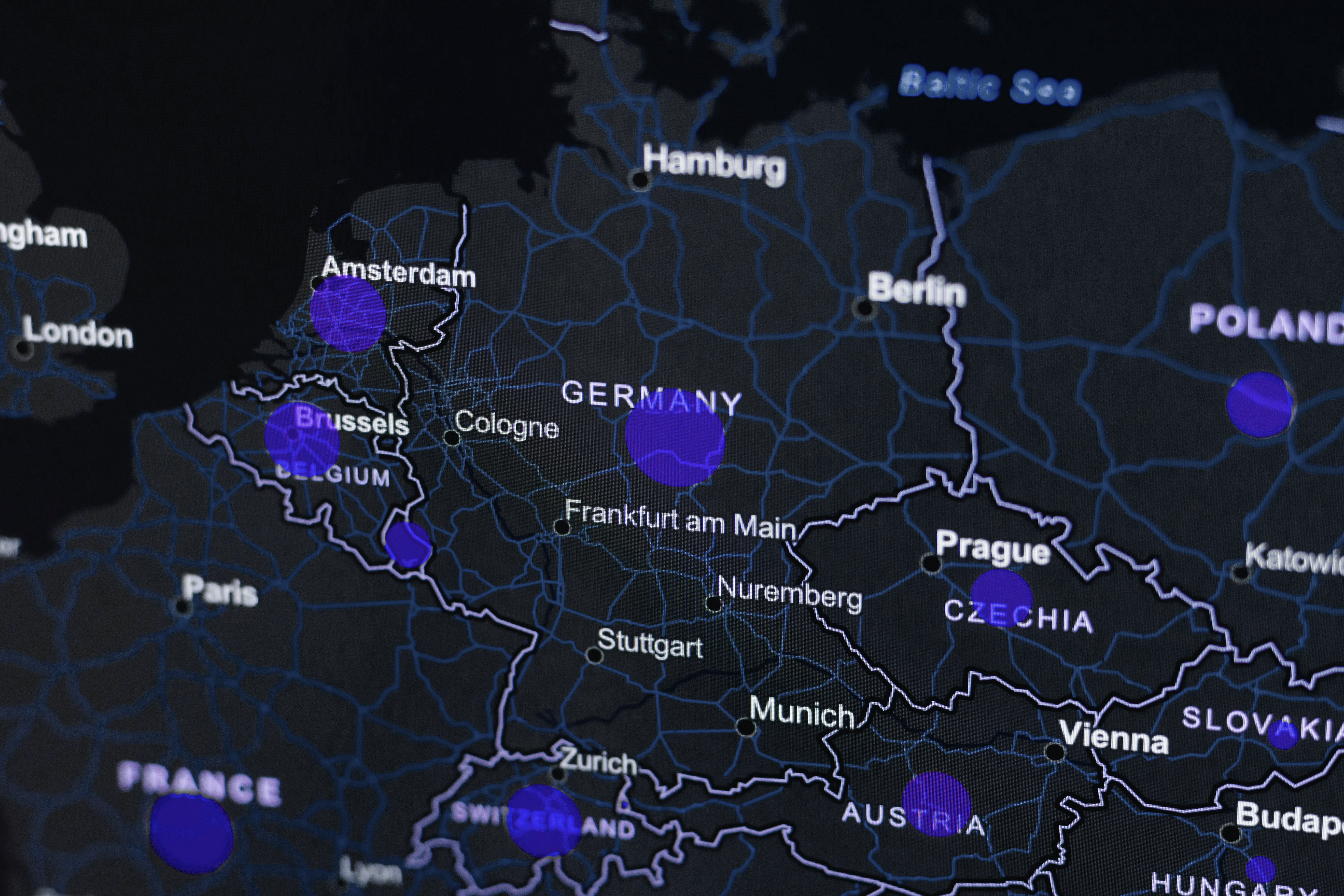
Wero is currently live in Belgium, France, and Germany, where it is available for both P2P and e-commerce payments.
In these markets, Wero is already widely used for P2P payments, with e-commerce acceptance continuing to expand across merchants and platforms.
In the Netherlands, Wero is set to expand through the migration of the local e-commerce payment scheme iDEAL into the Wero platform. This transition is expected to be completed by 2027, with iDEAL gradually phased out as Wero becomes the standard.
In Luxembourg, the EPI, Payconiq, and Buckaroo have announced a strategic agreement to support a similar transition from Payconiq to Wero. This will enable merchants currently using Payconiq to accept Wero payments, supported through Buckaroo’s platform infrastructure.
Looking ahead, the EPI plans to expand Wero into additional European markets as part of its broader ambition to establish a unified payment method across Europe.
Does your business need to think about accepting Wero?
Whether Wero is relevant for your business depends on your target markets and broader payment strategy. As Wero continues to develop across Europe, businesses operating in multiple markets may need to assess whether it forms part of their wider digital payment solutions approach.
There are several reasons businesses may consider Wero within their payment acceptance strategy:
Improve conversion
Offering more payment methods at checkout allows customers to pay using their preferred method. This can reduce friction, improve the checkout experience, and help lower cart abandonment rates. It also aligns with the ongoing shift towards A2A payment methods.
Merchant resilience
Diversifying payment methods can strengthen resilience at checkout. If one payment method becomes unavailable, customers still have alternative ways to complete their purchase. For example, if a payment card is lost, expired, or declined, Wero can provide another route to payment completion. This supports wider efforts to improve the resilience and independence of Europe’s payments infrastructure.
Market reach
Wero is currently available in several European countries, with further expansion planned. As Wero continues to expand, businesses could potentially reach customers across multiple countries through a more unified payment experience, reducing reliance on fragmented country-specific payment integrations.
Lower transaction costs
A2A payment methods such as Wero can offer lower transaction fees compared to traditional card schemes. Depending on the commercial model, this may improve cost efficiency for merchants, platforms, payment service providers, and acquirers.
How Wero fits into a payment acceptance strategy
Using Wero for e-commerce payments follows a customer journey similar to other A2A payment methods.
-
The customer selects Wero at checkout.
-
They are redirected to Wero or their banking app to authenticate the payment.
-
The customer authorises the payment and returns to the merchant website to confirm the purchase.
-
Funds are settled directly to the business account within seconds.
This flow will be familiar to users of other A2A payment methods, including open banking payments.
Wero is built on SEPA Instant infrastructure, enabling payments to be processed and settled within seconds of authorisation. For businesses, this provides near real-time confirmation of funds alongside direct settlement.
As a result, businesses benefit from faster access to funds and a streamlined payment experience that aligns with the continued shift towards real-time digital payment solutions trends across Europe.
If you are exploring how Wero may fit into your payment strategy, or want to better understand the evolving European payments landscape, our team can provide further insight.
Fire provides a range of digital payment solutions that support businesses in accepting payments, managing payouts, and integrating payment services more efficiently. To discuss how Fire can support your business, please get in touch with our experts.
–
FAQs
What is Wero and who runs it?
Wero is a pan-European payment scheme operated by the EPI. It allows users to send and request instant payments using a mobile number or email address, rather than an IBAN.
Which countries is Wero available in right now?
Wero is currently available in Belgium, France and Germany. It is also in the process of supporting the migration of iDEAL in the Netherlands onto its platform.
Is Wero the same as a bank transfer or open banking payment?
Wero operates in a similar way to other A2A payments, including traditional bank transfers and open banking payments, using SEPA Instant infrastructure.
The key difference is the initiation method. Payments can be triggered using a mobile number or email address, either by selecting a payee directly or responding to a payment request, rather than relying on IBAN entry.
Do businesses need a separate Wero integration, or does open banking infrastructure cover it?
Businesses that want to accept Wero payments will need to connect through a payment provider that has integrated Wero into its offering. It is not automatically covered by existing open banking infrastructure.
What types of platforms should be considering Wero acceptance?
Acquirers, platforms, and e-commerce merchants operating in Belgium, France, and Germany should consider whether Wero fits into their payment acceptance strategy.
Businesses in the Netherlands and Luxembourg may also want to prepare for upcoming availability, given planned migrations in those markets. More broadly, organisations operating across Europe should monitor Wero’s rollout and assess its relevance as it expands.
How does Wero affect payment strategy for platforms operating across multiple European markets?
For platforms and merchants operating across multiple European markets, Wero may help simplify payment acceptance by providing coverage across multiple countries through a single integration, reducing the need for separate local payment methods.
Can Fire’s API support Wero or Wero-compatible payment flows?
Wero is not currently available through Fire’s API. However, platforms, acquirers, and merchants in Ireland and the UK can integrate open banking payment gateway capabilities via Fire’s API, enabling account-to-account (A2A) payment acceptance through a proven infrastructure.
–
Contact our team to discuss your payment acceptance requirements and wider payments strategy. Explore our open banking payment gateway solution for account-to-account (A2A) payment acceptance. View our case studies to learn how businesses are optimising payment infrastructure and integrating digital payment solutions with Fire.